Tomatoes not included
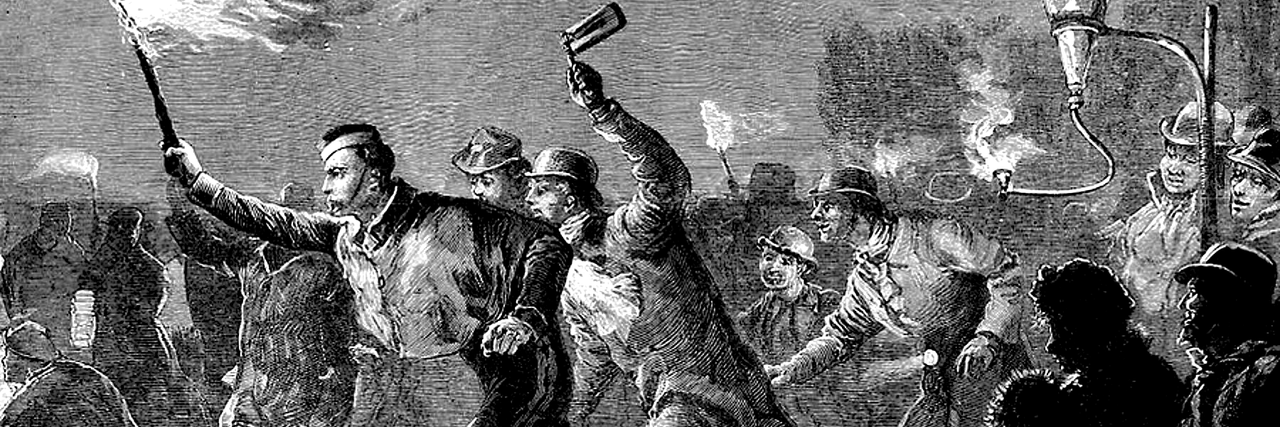 "Skating on the Serpentine by torchlight" (1881), in "The Illustrated London News". Public domain.
Genres, traditions, movements - whenever I try to understand more about this hobby, I keep coming across one of these terms or some variation I can’t remember on the spot. It seems the tabletop community, much like any other corner of the internet, suffers from a need to label everything and then argue over whose label is superior.
Me? I am at fault, too. My brain loves systematic thinking; having labels I can associate with certain characteristics makes my "filing cabinet" brain very happy. That being said, I had a difficult time trying to wrap my head around all of them, and to this day, I don’t understand everything. In fact, I don’t even want to understand everything.
Purists tend to sour my mood, and I’d rather keep an open mind than follow anyone else's "truth." I believe it was Nietzsche (yes, philosophy will keep popping up around here) who said that there are no facts, merely interpretations.
So, why am I calling them traditions?
I feel the term “tradition” doesn’t take itself as seriously as “genre” does, and “movement” implies a certain dynamism that doesn't quite define what I’m discussing here. At least, not anymore. Entering this hobby later than most meant I viewed these... traditions... as well-established (spoiler: they aren't), and thus felt there wasn't much "moving" left to do.
I am also using "traditions" as shorthand for “design traditions.” This hobby is naturally diverse, giving birth to various groups of players and GMs seeking particular experiences. A tradition - much like how the word is used in anthropology or sociology - carries cultural alignment and requires people to keep it alive.
Another reason I like the term is that most games in the TTRPG space use other games as inspiration - borrowing mechanics, mixing, and matching. Design traditions are not isolated - they contribute to a great palette of diverse thought. I knew there was a term for this, but I had to Google it to be sure: cultural diffusion. It’s the idea that cultural elements spread from one society to another, much like how design principles, dice mechanics, and play philosophies spread from one gaming space to another.
The Big Three
There are three traditions that feel like an evil trinity, wanting to consume your soul and send you onto the bloody battlefields of internet forums. I’m being hyperbolic, of course, but whenever someone discusses them, a goblin usually jumps out of a bush and initiative is rolled.
I wasn’t around for The Forge (ask the dinosaurs, most of them remember that indie-dev forum), nor did I see how GNS Theory set everything on fire, but I’ve heard stories. Through those stories, I learned that what we now call Storygames, OSR, and Trad map quite cleanly onto what Ron Edwards tried to classify as "play agendas."
The problem? For starters, I am not an elitist and I don't want to police other people. While I salute Edwards’ intention to bring structure to the design space, the only "high horses" I like are Salvador Dalí’s surrealist creatures. I firmly believe there is no "right" way to roleplay, regardless of how strongly I feel about specific traditions.
Even so, my experience as both a player and a GM aligns with the idea that different games have different focuses, which eventually collapse into specific categories. That's not to say there's no overlap between them.
My understanding of the Big Three is as follows (tomatoes not included):
- OSR (Old-School Revolution): Started as a movement and became a tradition. It focuses on locations and challenges, prioritizing problem-solving and putting the “play” in roleplaying.
- Storygames (or Narrative Games): Emerged from The Forge but are moving past those roots. They treat the "story" as the ultimate good, adopting a "writer’s room" mentality and a collaborative approach to storytelling.
- Trad (Traditional): I’ll be damned if I know how to phrase this one. I imagine it like a video game: you are inside a predefined world, playing a character according to that world’s rules, and trying to simulate it accurately. "Accuracy" here is highly dependent on the world presented by the GM.
I don’t intend to parse the entire history of the hobby just to hit people with an “Actually, you’re wrong!”. No, my goal is to have a basic understanding of what came before so that my work as an aspiring designer can be an honest nod to the forefathers, foremothers, and... fore-enbies? That’s why these definitions are entirely my own and far from detailed. Many might even consider them incorrect and that’s totally fine.
The Dark Horses
I know this is getting lengthy, but bear with me. Aside from the Big Three, there are two "dark horses" worth mentioning. They might be niche, but they are vital: NSR and FKR.
It might just be my borderline romantic attraction to everything "rules-lite," but there is something gorgeous about these two. I could go on about my understanding of them, but there are people with better credentials. While I’m not exactly bundling them together, they both emerged as reactions to the OSR. Please, go read what Yochai Gal has to say about NSR and Luke Saunders about FKR. Very insightful articles.
What I really want to emphasise is that my design ethos (fancy word, right?) tends to align with these. Not fully, but partially for sure. My foundation as a player is that of a storygamer, but as a designer, I find myself drawn to principles that overlap with NSR and FKR.